
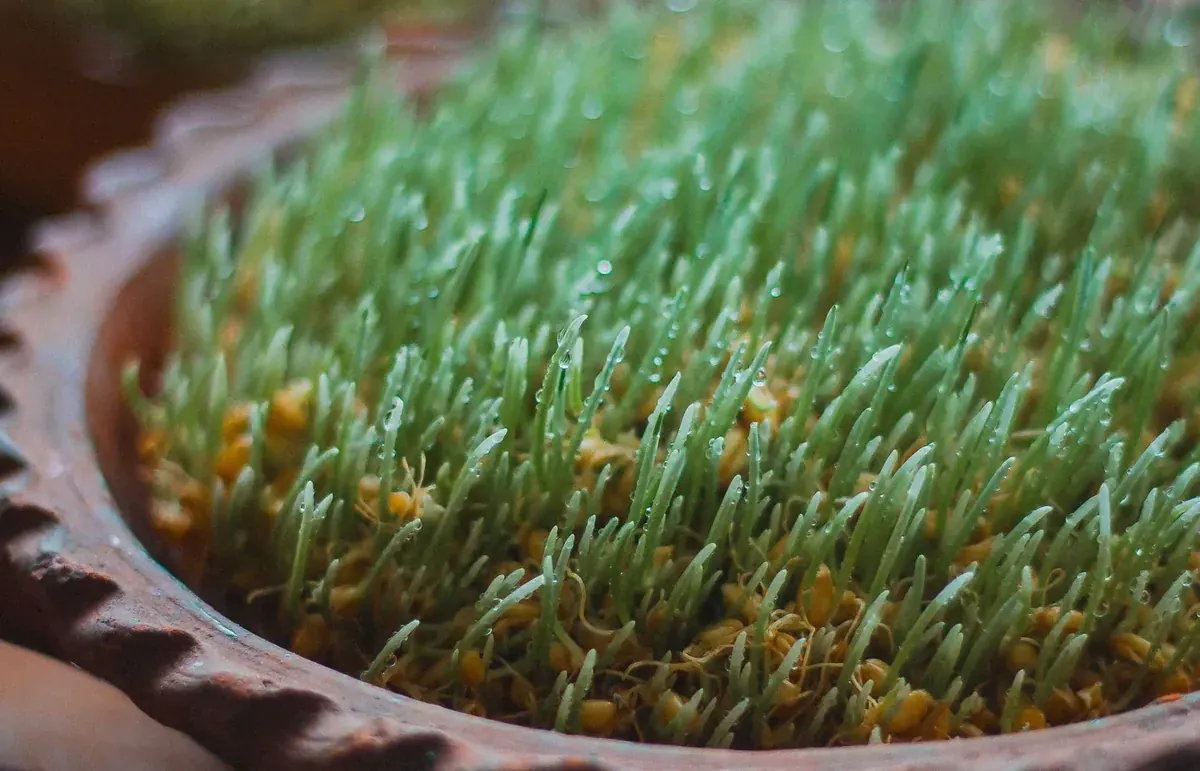
About Wheatgrass Production
Wheatgrass production is presented as an institute skill programme focused on seed selection, soaking, sprouting, tray preparation, irrigation, hygiene, harvest timing, packaging and small-batch enterprise planning. It is a cultivation and handling course, not a medical-treatment qualification.
The programme is suitable for learners interested in hygienic small-batch cultivation, harvest handling, packaging and basic enterprise planning.
What Students Learn
Seed selection
Variety, viability, cleaning and the effect of seed quality on uniform growth.
Soaking and sprouting
Water quality, timing, drainage and prevention of souring or mould.
Tray and medium preparation
Growing medium, tray sanitation, sowing density and moisture balance.
Crop environment
Light, ventilation, temperature and irrigation routines for healthy shoots.
Harvest and hygiene
Harvest timing, tool cleanliness, washing practices and rapid handling.
Packaging and costing
Yield records, packaging, cold-chain awareness, pricing and customer communication.
Institute Skill Curriculum
The Wheatgrass Production programme introduces the cultivation, hygiene, handling and enterprise topics presented on this page through an institute-level skill curriculum.
Practical Learning
Practical activities may include
- Cleaning trays and preparing a batch record
- Measuring seed, soaking and sprouting
- Sowing and maintaining moisture without waterlogging
- Daily growth, odour and mould observations
- Harvest, weighing, packing and simple costing
Equipment and resources
- Food-grade trays and drainage racks
- Weighing scale, measuring jars and sprouting containers
- Clean growing medium or approved mat system
- Watering or misting tools
- Harvest knife, gloves, packaging and labels
Programme Features
Skills Developed
- Plan a small wheatgrass production cycle
- Maintain hygienic tray and seed-handling routines
- Identify moisture or mould problems early
- Record batch yield and input costs
- Explain storage, packaging and customer-information limits
Enterprise Pathways
- Start a home-scale or small wheatgrass production unit
- Offer fresh trays or cut wheatgrass through direct or subscription orders
- Supply suitable products to local health-food or juice outlets without medical claims
- Expand practical skills into related microgreens production
- Conduct basic growing demonstrations or training after gaining experience
Entrepreneurship & Self-Employment Guidance
This skill programme is suited to small-batch enterprise planning and self-employment development. Guidance focuses on hygienic production, batch records, costing, packaging, customer communication, repeat-order planning and responsible product information.
Business opportunities depend on practical competence, hygiene standards, local demand and applicable food, trade and licensing requirements. No medical or therapeutic claims should be made for wheatgrass products.
Who This Programme Suits
This programme is designed for learners who are interested in controlled growing, handling and small-enterprise activities, value practical learning and can follow structured safety, teamwork and documentation practices.
Admission Enquiry
- Choose the programmeReview the overview, subjects, practical learning and enterprise direction for the course.
- Contact admissionsShare your name, preferred programme and location through WhatsApp or phone.
- Submit the applicationComplete the online form or application process with the documents requested by admissions.
- Confirm enrolmentReceive the current fee, batch timing and joining information from the admission team.
Frequently Asked Questions
Review the programme overview, published duration, learning areas, practical components, enterprise direction and current admission information on this page.
The page describes programme-linked practical learning, supervised familiarisation and the relevant safety or documentation context.
Contact the admission team for the current eligibility route, branch, timetable, fee and joining information before applying.
Use the admission enquiry first, then continue through the official online application or the institute's published application process.
Possible pathways include a home-scale production unit, direct or subscription orders, suitable local outlet supply, expansion into related microgreens, packaging and delivery, and basic growing demonstrations or training after gaining practical experience. Business results depend on hygiene, demand and local requirements.