
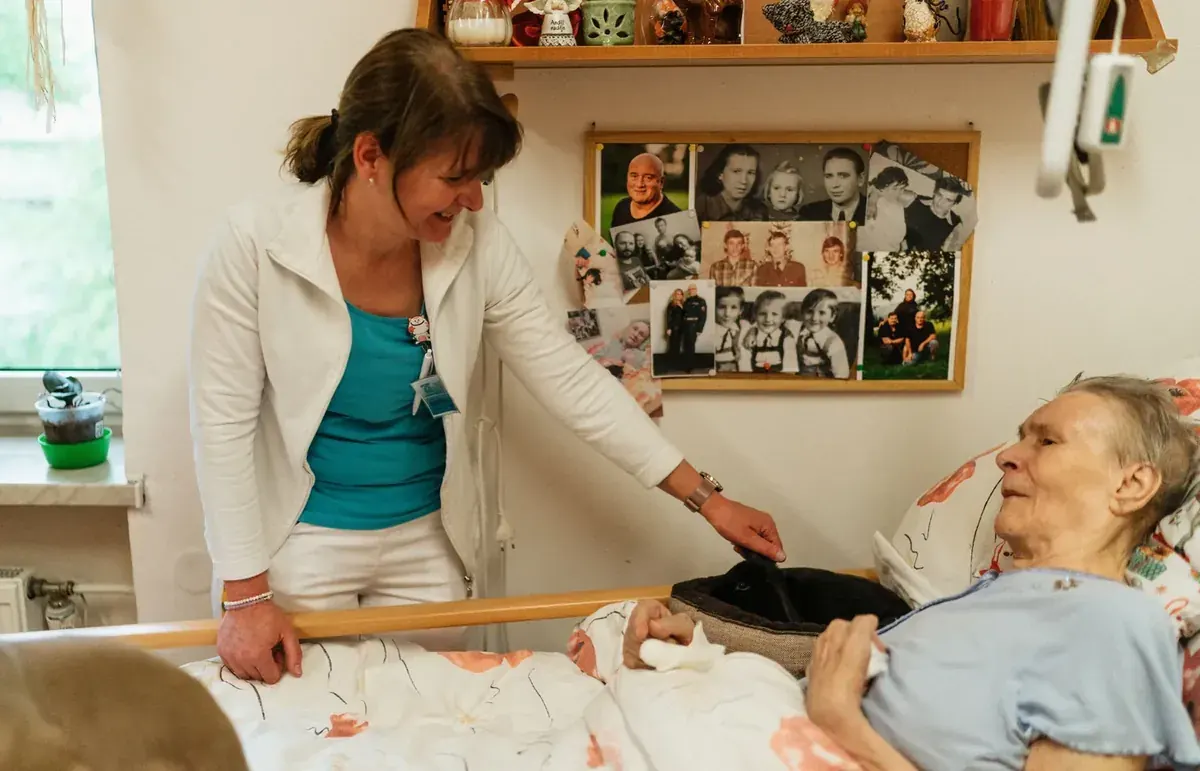
About Patient Care
Patient care education builds foundational knowledge in nursing support, anatomy and physiology, psychology, first aid, nutrition, communicable-disease awareness, preventive medicine and surgical-nursing concepts. The BSS syllabus also includes midwifery and seven practical papers across two years.
The programme develops supervised skills in comfort, hygiene, mobility, observation and communication. It does not create the scope of a registered nurse or permit independent medication, diagnosis or invasive procedures.
What Students Learn
Fundamentals of nursing support
Bedside organisation, comfort, hygiene and delegated routine-care awareness.
Anatomy and physiology
Basic body systems and terminology used in patient communication and observation.
Psychology and sociology
Respectful interaction with patients and families from different backgrounds.
First aid and safety
Basic immediate support, falls prevention and rapid escalation in emergencies.
Nutrition and prevention
Food, hydration, communicable-disease awareness and public-health education.
Surgical and maternal-care awareness
Introductory support concepts with strict limits and qualified supervision.
Programme Subjects & Practical Components
I Year
| Subject Code | Official BSS Subject |
|---|---|
| AHS001-01 | Communicative English and Computer Fundamentals |
| AHS001-02 | Fundamentals of Nursing, Pharmacology and Microbiology |
| AHS001-03 | Anatomy, Physiology, Sociology, Psychology and First Aid |
| AHS001-04 | Nutrition, Family Planning and Communicable Diseases |
| AHS001-05 | Practical – I |
| AHS001-06 | Practical – II |
| AHS001-07 | Practical – III |
| AHS001-08 | Practical – IV |
II Year
| Subject Code | Official BSS Subject |
|---|---|
| AHS001-09 | Nursing, Social and Preventive Medicine |
| AHS001-10 | Surgical Nursing |
| AHS001-11 | Midwifery |
| AHS001-12 | Practical – V |
| AHS001-13 | Practical – VI |
| AHS001-14 | Practical – VII |
Subject names are presented as listed in the BSS academic reference used for this course page.
Practical Learning
Practical activities may include
- Bed making, comfort and safe positioning demonstrations
- Hand hygiene, PPE and personal-care simulations
- Assisted mobility and transfer practice
- Basic observation and communication exercises
- Patient-record, diet and intake-output documentation awareness
Equipment and resources
- Hospital bed and positioning aids
- Wheelchair, walker and transfer accessories
- Thermometer, blood-pressure and pulse-oximeter awareness
- PPE, hygiene and infection-control supplies
- Bedside charts and basic documentation forms
Programme Features
Skills Developed
- Support patient comfort, dignity and safety
- Use basic communication and observation skills
- Follow infection-control and safe-mobility procedures
- Document delegated tasks clearly
- Escalate pain, distress or changing observations promptly
Work Settings
- Patient care assistant trainee
- Ward support assistant
- Home-care support assistant
- Elder-care or rehabilitation support assistant
- Hospital attendant with structured training
Career Guidance & Placement Support
Career guidance focuses on profile preparation, interview orientation, workplace communication and awareness of suitable healthcare work settings.
Who This Programme Suits
This programme is designed for learners who are interested in patient-support and healthcare-assistance environments, value practical learning and can follow structured safety, teamwork and documentation practices.
Admission Enquiry
- Choose the programmeReview the overview, subjects, practical learning and career direction for the course.
- Contact admissionsShare your name, preferred programme and location through WhatsApp or phone.
- Submit the applicationComplete the online form or application process with the documents requested by admissions.
- Confirm enrolmentReceive the current fee, batch timing and joining information from the admission team.
Frequently Asked Questions
Review the programme overview, published duration, learning areas, practical components, career direction and current admission information on this page.
The page describes programme-linked practical learning, supervised familiarisation and the relevant safety or documentation context.
Contact the admission team for the current eligibility route, branch, timetable, fee and joining information before applying.
Use the admission enquiry first, then continue through the official online application or the institute's published application process.
Use the Placement Support page for published recruiter records and the institute's career-guidance information.